

Qualifications & Experience
The University of York
September 2017 – June 2020
BA (hons) Education and Sociology – 2:1
Watford Grammar School for Boys
September 2009 – June 2016
11 GCSE’s – 3 A*’s, 8 A’s Mathematics – A // English language – A & A*’s – English Literature // History // Latin Language
A2 levels
Philosophy and Ethics – A // Geography – B // Spanish – C
AS levels
Philosophy and Ethics – A // Spanish – B // Geography – B // English Literature – C
Child Protection Awareness – ECP Safeguarding 2/09/2025
Certificate in Counselling Skills – Newcastle College 20/07/2021
Enhanced DBS Certificate
Youth Service Manager – Kisharon Langdon (2021-2024)
Higher Level Teaching Assistant – Harefield School & St John’s Wood Upper School (2025-2026)
My Pedagogy (Learning principles)
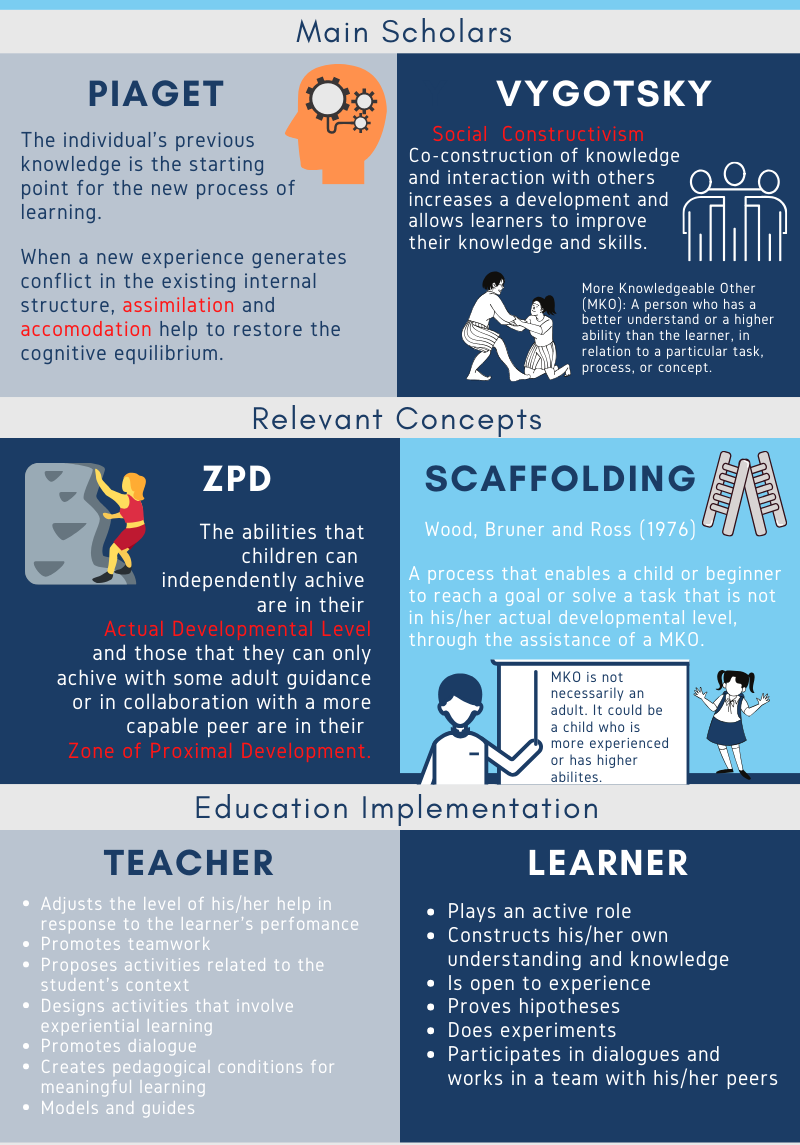
Constructivism
Individuals construct their own knowledge and understanding of the world based upon their unique experiences interacting with it. As an educator I believe in encouraging students to think for themselves about what we are analysing, evaluating for themselves what their opinion of the topic is and how it’s relevant to material they are already familiar with. A constructivist approach to learning is dependent upon the educator working in relation to the student’s specific motivations, presenting new information and learning exercises in ways that help the student to feel like the educator is on the learning journey alongside them. This is a key reason why I perceive building a meaningful relationship with my students as an integral part of achieving our long term learning aims.
Integration and Scaffolding
Just because learning in schools takes place via subject separated lessons, doesn’t mean that knowledge and skills developed through different topics aren’t portable to learning about others. Quite the opposite — the more connections that learners can make between the information or skill they already feel in command of and that which they are attempting to secure, the greater the likelihood that this is retained and utilized in future learning and problem solving. Integration and scaffolding is about using people’s existing strengths, no matter where these lie, to help learners understand and feel positive towards learning how to develop what they’re not yet as confident in.
About Me
My name’s Joel and I’m dedicated to supporting students with SEND to achieve their own definition of success.
Having spent 5 years working in SEND youth work and education, I’ve recognised that it can be quite difficult for some students to make consistent progress with a traditional tutor – especially those with SEND and/or behaviours that challenge. Given that it’s these students in particular who would most benefit from a personally informed approach to understanding and applying subject knowledge, I’ve decided that it’s time to focus my skillset towards providing such a service.
The reason I am committed to this cause stems from my own experiences growing up with Dyspraxia. In Primary School I didn’t yet have this diagnosis and I felt that I was just ‘slow’ and would always have to work harder than my peers to barely keep up. When I got to secondary school and my learning difficulty was formally identified, it helped me to know that I would get extra time in exams, but I still had a chip on my shoulder about not being able to keep up in class and feeling less naturally capable than my peers. I developed a negative attitude towards learning and I recognised this to be the case only 7 years later in my final year of university. I had studied out of fear that I needed to avoid failure and criticism, and while that ultimately lead to academic success that temporarily fulfilled me, it also caused me not to reflect on my learning journey as a lifelong process worth taking the time and effort to enjoy.
As a result of this experience and prevailing academic thought, I’m without doubt that SEND students are more likely to struggle with learning if all they experience of it is at school. So much of the student experience in formal education is inextricably structured around their ability to succeed in assessments; unfortunately it appears to be the case in primary schools now too. It takes resilience to continually try your best at school despite feeling or knowing that you’re innately disadvantaged, and without the individualised support to help such a person navigate their school experience it’s no wonder that SEND students can find it so daunting to do homework or study for tests, let alone sit public exams.
If your child has barriers to learning, I can provide long term solutions. It will require for them to feel appropriately challenged, but that’s how we’ll build the resilient attitude to learning that they’ll be able to lean on for the rest of their life.
Services
Learning Coaching
1:1 learning coaching for SEND students in Watford and surrounding areas.
Study sessions uniquely designed to support the student to overcome their specific barriers to successful learning, informed by 8 years of learning, training and experience working in SEND support. I achieve this by identifying the individual’s existing strengths and harnessing these to address their current weaknesses in ways that are approachable, enjoyable and sustainable in the long term.
Though I have previously specialised in Maths and English interventions, my wider experience as a student and Higher Level Teaching Assistant have equipped me well to support learning in all subjects Key Stages 2-4.
At the end of each session the student will have an achievable study plan and suitable practice exercises for between then and our next booking.
Available for students in Primary and Secondary school.
1 hour – £50 2 hours – £85 3 hours – £110
Location
My home office (Watford, WD18). Parental attendance mandatory.
Your home or local library
What will my child’s learning coaching look like?
Testimonials
Previous colleague and mother of 3
I have no hesitation in recommending Joel to any family looking for someone who is kind, understanding and genuinely committed to helping young people with SEND thrive.
I worked alongside Joel for three years supporting children, teenagers and young adults with SEND, and during that time I saw first hand the positive impact he had on young people he worked with. Joel has a natural warmth and empathy that helps people feel at ease. He has the ability to connect with young people, taking the time to get to know each student as an individual and understand what works best for them. He recognises that every learner is different and adapts his approach to suit their needs, rather than expecting them to fit into one way of learning.
One of the things I’ve always admired about Joel is how naturally he makes people feel important. He listens without judgement, is incredibly patient, and creates an environment where students feel safe to ask questions, make mistakes and build confidence. For many young people with SEND, having someone who truly believes in them can make all the difference, and Joel is that person.
He’s not just interested in helping students make academic progress; he genuinely wants them to grow in confidence, become more independent and recognise their own strengths.
— Lisa Millett
Previous Colleague and SEND Lecturer
From 2022-2024 I worked alongside Joel Landschaft-Singe to develop and deliver a youth service for young people with special educational needs. During this period Joel acted as my manager, mentor, and collaborator as we worked together to create a universally inclusive community that contributed to the personal social development of young people with a range of communication, sensory, and educational needs. The success of this project can be attributed to both Joel’s leadership, vision, and moral integrity, and his ability to leverage rapport and trust into impactful educational and social development outcomes for the young people he supported. I have no hesitation in recommending Joel to anyone seeking a compassionate, thoughtful, and highly effective learning coach.
— Charlie Coulson-Smith, SEND Lecturer
FAQs
- What’s the difference between a learning coach and a tutor?
A learning coach and a tutor do similar jobs in principle. Our aim is to improve the learning outcomes of students who require extra support. A tutor is likely to focus exclusively on transmitting subject knowledge and exam technique to their students with the specific intent of maximizing their assessment scores. A learning coach takes a holistic approach to a student’s learning and builds a strong understanding of their clients’ strengths and weaknesses to scaffold their sessions appropriate to the individual’s goals – many of which are not going to be assessment related. If your child has tried tutors before and not responded positively, I’d strongly suggest making an enquiry with a learning coach.
- Can I book a session if my child doesn’t have a clinically identified learning difficulty or disability?
Absolutely you can. If your child has challenges learning and studying at school or home, when these difficulties are described to me and I get to know the character of the student I will still be able to strategize sessions and study plans bespoke to their aims.
Can I book learning coaching sessions for during the school holidays?
- Most certainly, in fact I’d strongly suggest doing so. For students with SEND and barriers to inclusion, starting or maintaining a learning routine can be particularly valuable in reversing long held negativity towards academics and school. While there’s never a bad time to start a learning routine, using periods of time off school to start learning coaching has a multitude of benefits towards handling the pressures of school life once they return during term time.


 Resilient Learning Strategies